When should I remove old Helleborus leaves?
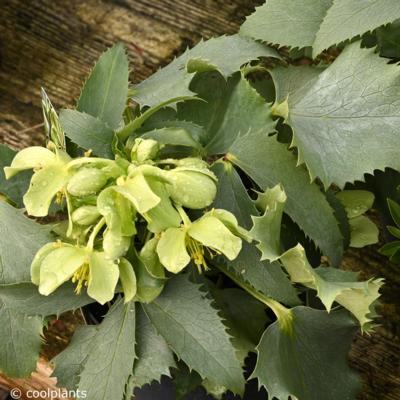
With Helleborus × hybridus, remove the old leaves when the flower stems are clearly emerging, usually in winter or early spring. This shows the flowers better and also removes old foliage on which leaf-spot diseases can overwinter. With species valued for their persistent foliage, it is better to remove only damaged or diseased leaves.
Why does a Helleborus sometimes flower less well after a few years?
The cause is often not the age of the plant but the growing conditions. Deep shade, competition from tree roots, compacted soil or a site that stays too wet in winter can all reduce flowering. Helleborus grows best in humus-rich, well-drained soil that stays sufficiently moist in spring but does not remain waterlogged in winter.
Can Helleborus grow in full sun?
Yes, but not every species tolerates sun equally well. Many Helleborus × hybridus grow very well in light partial shade and also tolerate morning or evening sun. Strong midday sun on dry soil is more likely to cause leaf damage and stress. Species from more open, drier habitats generally tolerate more sun than typical woodland or woodland-edge species.
Why do Helleborus seedlings not look like the parent plant?
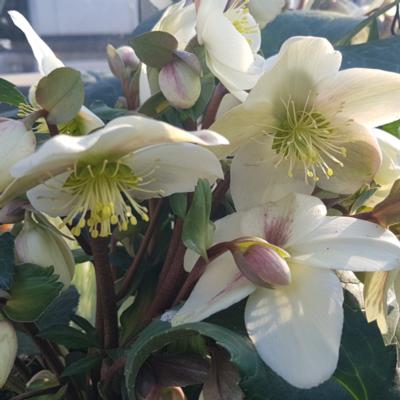
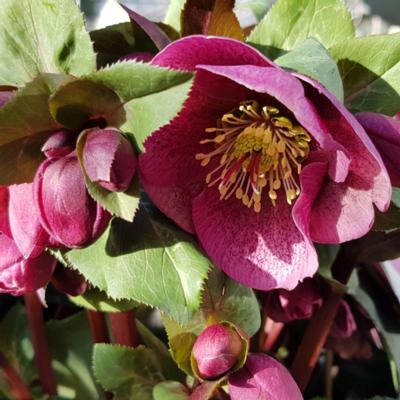
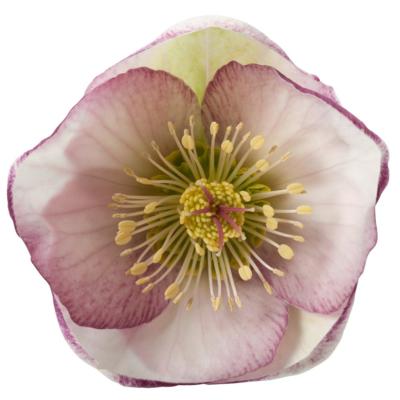
This is normal. Most Helleborus × hybridus are genetically very variable and cross readily with nearby plants. Seedlings can therefore differ greatly in flower colour, markings, flower shape and vigour. Only vegetative propagation produces plants that are genetically identical to the parent plant.
When is the best time to move a Helleborus?
Helleborus prefers to be left undisturbed. If moving is necessary, do it preferably in early autumn or shortly after flowering, while the soil still has enough moisture. Dig up a generous root ball and keep as many roots intact as possible. Older plants may need one or two seasons after transplanting before they flower strongly again.